Correct Implant Firmness and Distortion

Capsular contracture occurs when the scar tissue your body naturally forms around a breast implant tightens and thickens more than it should. Instead of remaining soft and flexible, the capsule can squeeze the implant, leading to firmness, distortion, or discomfort. This condition can develop months or years after breast augmentation or reconstruction. Capsular contracture treatment in Gilbert begins with understanding why it developed, then addressing both the implant and surrounding tissue to restore a more natural look and feel.

Capsular Contracture Overview

Am I a Good Candidate for Capsular Contracture Treatment?

Capsular contracture develops when the scar tissue your body naturally forms around a breast implant tightens and thickens over time. Instead of staying soft and flexible, the capsule begins to contract, placing pressure on the implant. This can progress slowly or appear more suddenly, changing how your breasts feel, look, and move. You may be a good candidate if you notice the following symptoms of capsular contracture:

  • Changes in breast shape, position, or symmetry
  • A breast that looks higher, rounder, or distorted
  • Discomfort, tightness, or pain that worsens over time
  • A breast that feels less natural when touched
  • Increasing firmness or hardness in one or both breasts

Before & After Capsular Contracture

Warning:

This gallery contains nudity. Please click OK to confirm you are at least 18 years of age and are not offended by this material.

View Gallery
marble media
dr. jaiswal headshot 1

Why Choose DrSkin?

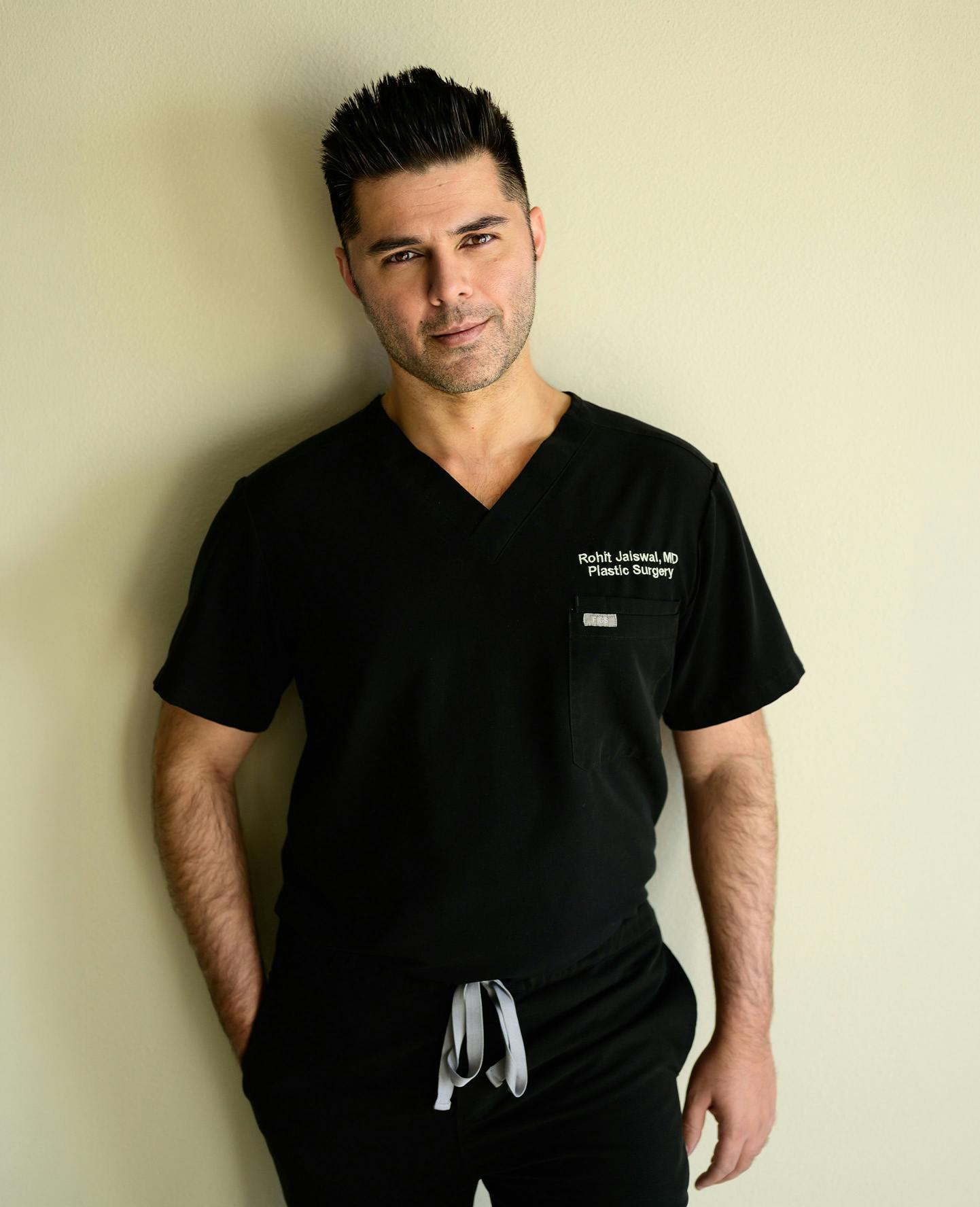
DrSkin is Arizona’s most complete aesthetic practice, where we bring surgical precision and regenerative insight together under one roof. For capsular contracture in Gilbert and Chandler, your treatment is led by Dr. Jaiswal, a board-certified plastic surgeon with extensive experience in complex breast revision procedures. This focused expertise means your care is not rushed or one-size-fits-all. Instead, Dr. Jaiswal evaluates the implant, capsule, and surrounding tissue to create a precise plan to restore comfort, improve aesthetics, and support long-term results.

Treatment Options for Capsular Contracture

Treating capsular contracture begins with a thorough evaluation of your symptoms, implant history, imaging when needed, and physical findings. At DrSkin, we assess the capsule, its impact on the implant, and potential contributing factors. Your plan for capsular contracture treatment is then carefully tailored to address both the scar tissue and the implant.

Non-Surgical Management

In early or mild cases, non-surgical management may help reduce inflammation and slow progression. This can include prescription medications that target inflammatory pathways, ultrasound therapy to soften scar tissue, or careful monitoring to assess changes over time. The goal is to decrease the biological signals that cause the capsule to tighten. While non-surgical options do not remove scar tissue, they may help manage early capsular contracture.

Capsulotomy

A capsulotomy involves surgically releasing the tight scar tissue surrounding the implant without fully removing the capsule. During the procedure, precise incisions are made in the scar tissue to relieve pressure and allow the implant to settle into a more natural position. By disrupting the constricting fibers, the breast can regain softness. This approach is typically considered when the capsule is thickened but not severely calcified or extensively distorted.

Total Capsulectomy

A total capsulectomy removes the entire scar capsule that has formed around the implant. This eliminates the tight tissue compressing the implant and contributing to firmness or distortion. After removing the capsule, the implant may be replaced or repositioned, depending on your goals. By excising the scar tissue, this procedure reduces the mechanical forces causing tightness and provides a fresh surgical environment for more stable, long-term results.

En Bloc Capsulectomy

An en bloc capsulectomy removes the implant and the surrounding scar capsule as a single, intact piece. This technique keeps the capsule sealed around the implant during removal, which may be appropriate in select cases involving significant inflammation or implant concerns. By extracting everything at once, the body can heal without residual scar tissue. Not every patient requires this approach, but it can be beneficial when a comprehensive reset is needed.

Implant Replacement (If Needed)

Implant replacement may be recommended when the existing implant contributes to recurrent scar formation or distortion. During surgery, the implant can be exchanged for a different size, shape, or material better suited to your anatomy and tissue response. This adjustment helps reduce mechanical stress on the surrounding tissue. Implant replacement is often combined with capsule treatment to improve comfort and lower the risk of future contracture.


Background media

Schedule A Consultation

Contact Us
Contact us media

Benefits of Capsular Contracture Treatment

Capsular contracture treatment in Gilbert focuses on restoring comfort, improving breast appearance, and preventing further complications by addressing the underlying scar tissue and implant environment. With the right approach, treatment can provide meaningful, long-term benefits, including:

  • Lower risk of recurrence when underlying factors are addressed
  • Reduced breast firmness and pressure
  • Improved breast shape, position, and symmetry
  • Relief from discomfort or ongoing pain
  • Improved confidence in how your body looks and feels
  • A softer, more natural breast feel
Banner media

Visit Arizona’s Most Complete Aesthetic Practice

DrSkin offers comprehensive expertise in surgical, aesthetic, and regenerative care under one roof, serving patients throughout Gilbert, Chandler, Mesa, Apache Junction, and Queen Creek. If you’re experiencing discomfort or implant-related concerns, schedule your consultation in Gilbert or Chandler to explore your personalized treatment options for capsular contracture.

Capsular Contracture FAQ

Can capsular contracture come back after treatment?

Yes, capsular contracture can recur, but the risk depends on why it developed, how severe it was, and how it’s treated. At DrSkin, we focus on more than removing scar tissue: we evaluate implant type, pocket placement, tissue quality, and healing response. By addressing contributing factors, not just the capsule itself, we aim to support long-term implant stability.

How soon after breast augmentation can capsular contracture develop?

Capsular contracture may develop shortly after surgery or many years later. Early changes are often subtle, such as mild firmness, while more advanced cases can lead to visible distortion or increasing discomfort. Because the condition does not progress the same way for everyone, monitoring changes is important. If something feels “off”, you must get an early evaluation.

Do I need my implants removed to treat capsular contracture?

Not always. Some patients benefit from capsule release or removal with implant preservation or replacement. Others may choose to remove the implant. There is no single “right” answer. The most effective plan is the one tailored to your body, implant history, and long-term priorities.

Contact us media

Request a Consultation

Meet with our team to explore thoughtful solutions for your aesthetic and wellness goals.

Contact Us
Accessibility: If you are vision-impaired or have some other impairment covered by the Americans with Disabilities Act or a similar law, and you wish to discuss potential accommodations related to using this website, please contact our Accessibility Manager at (602) 726-4218.
DrSkin Voted Best of Gilbert 2026

Contact Us